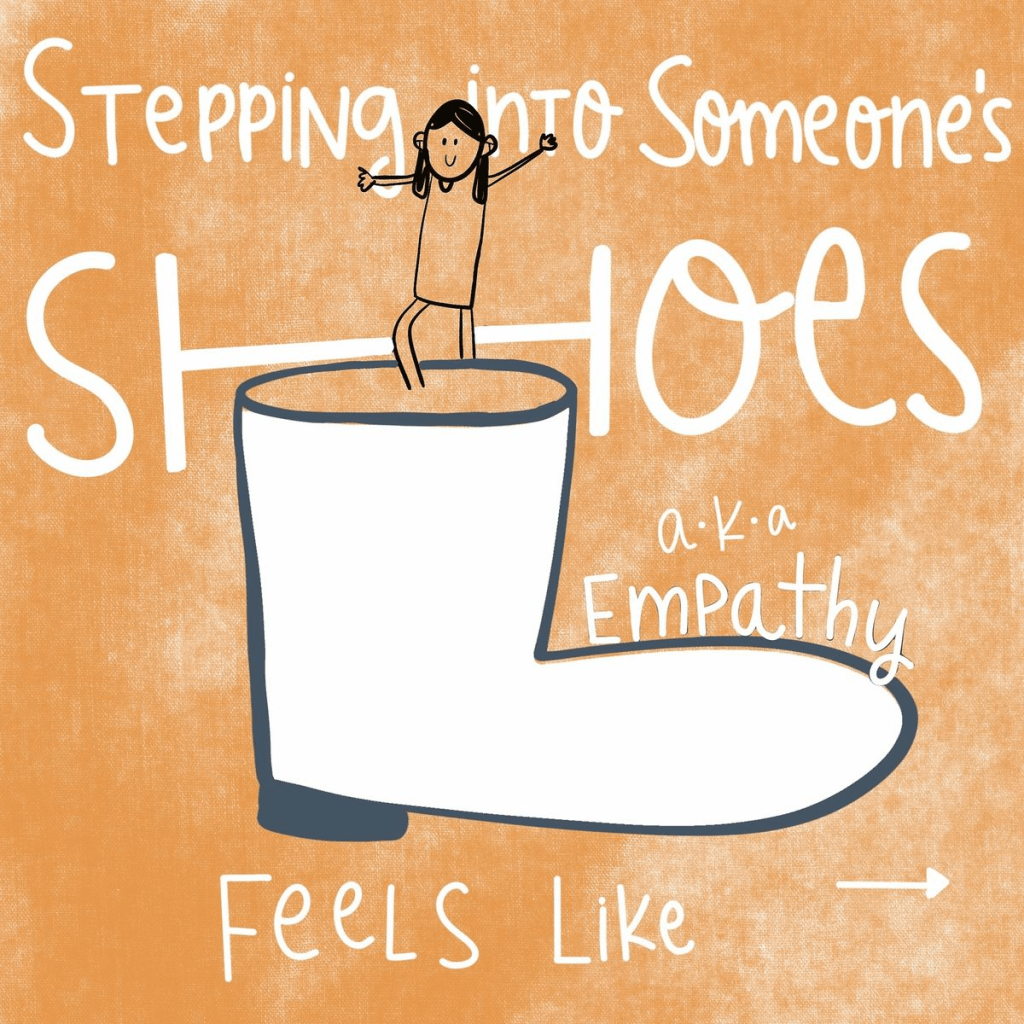
• Science and empathy might seem like opposites because one is rooted in data and the other is rooted in emotion. However, through both experiences and discussions in my Theory of Knowledge (TOK) class, I’ve come to realize how connected they truly are. In particular, neuroscience and human sciences thrive on understanding people. It’s not just about neurons firing or analyzing brain scans. Instead, I believe that it’s about what those signals really mean. It’s about the stories, emotions, and experiences behind them.

    In a recent TOK class, my teacher told my class about the Stanford Prison Experiment, where a group of young men were given roles to “act” like prisoners and guards to see how the situation unfolded. As I watched the documentary, I remember thinking about how empathy played such an important role in the experiment because understanding the actions of prisoners/guards in real life required putting the participants in the shoes of these “characters.”

    When I work with neurodiverse children, I usually think of empathy as a kind of “soft science.” It helps bridge what research shows and what real people feel. A textbook might describe sensory overload or executive dysfunction, but empathy teaches us how those things look in daily life, whether it’s the noise that feels like too much for certain kids, or the frustration when words won’t come out right

    True empathy means listening without judgment. It means asking, “What can I learn from you?” instead of “What’s wrong with you?” So while fields like neuroscience can teach us about the mechanics of the brain, empathy teaches us about its meaning and magic behind it.

    The more we blend compassion with science, the more humane discoveries become. Empathy is the catalyst that can lead scientists to ask better research questions and develop better therapies as well as more inclusive education based on the experiences of their loved ones. It reminds us that science isn’t just about what goes on in labs, it’s about what goes on in people’s lives.

    So, looking forward, if we all want our future to include mental health and medicine actually help everyone, then empathy is not optional; it’s essential.
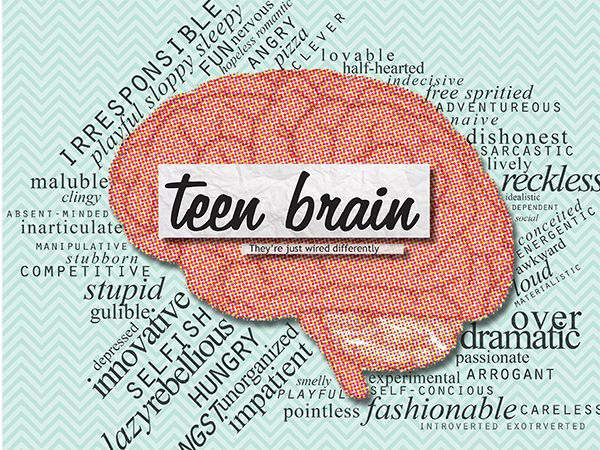

  • If you’ve ever felt like your emotions as a teenager are a rollercoaster, there’s a scientific reason for that! During adolescence, the brain is undergoing one of its biggest transformations since early childhood.

    The prefrontal cortex, the part responsible for decision-making and self-control, is still developing. On the other hand, the amygdala, which controls emotion, is highly developed and in overdrive. This imbalance means teens often feel first and think later.

    However, that doesn’t make the teenage brain completely irrational, it makes it stronger and more adaptive. Teen brains are wired for exploration and social connection. That’s why friendships feel so powerful, passions so intense, and heartbreaks so real. This is a time where teenagers are increasingly getting self-aware and learning who they are as people.

    Understanding this isn’t just about biology, it’s also about compassion. Adults often dismiss teen emotions as “overdramatic,” but neuroscience tells a different story. Every intense feeling and bold idea is part of the brain’s wiring process as it matures.

    It’s funny to think about now, but I remember when I was in middle school, I used to get into arguments with people who said something against what I felt passionate about. Whether it was a musical artist, one of my hobbies, or even my generation (Gen Z), I used to defend these things so fiercely. These passions have shaped me, and continue to shape me, into who I am today. So, if you ever feel too much, remember: your brain is literally building pathways that will shape who you become. Feeling deeply is not a flaw; it’s growth in motion. 🌱

  • “Happy New Year!” 

    That’s something that everyone says, but how happy really is it? The new year is definitely a joyous, celebratory occasion that allows for a blank slate. It’s like starting a new book, with 12 new chapters, and 365 pages to write your own story. However, there is also a somewhat melancholy state this time of year. There’s the quiet regret that looms as we look back at the year we’ve just completed, reflecting on the ups and downs, and the anxiety that comes with writing new resolutions. But something important to remember is that these feelings are normal and universal.

    For me, personally, I know that 2026 will be a challenging year. This is the year that I will apply for college, take my first IB exams, and face so many new experiences. These things bring me a lot of anxiety, but also a lot of hope. What we all need to remember is to hold on to that hope, and let it be what carries us through the hardest moments.

    2026 doesn’t have to be a blank slate, unless you want it to. The new year doesn’t erase the past, it builds on it. It builds on the lessons you’ve learned, the memories you’ve made, and the people you’ve experienced life with. All of these things make you, you.

    Maybe that’s something we can all carry with us into this year, and that’s enough to begin.

  • The brain is fascinating, mysterious, and unfortunately, surrounded by myths that just won’t go away. Let’s clear up a few of the biggest ones:

    Myth #1: We only use 10% of our brains.
    This is not true! Brain imaging shows that nearly every part of the brain is active at some point throughout the day, even when we rest or sleep.

    Myth #2: You’re either “left-brained” or “right-brained.”
    While certain tasks may lean toward one hemisphere, both sides constantly communicate with one another. Creativity and logic aren’t opposites, they’re teammates and are always collaborating.

    Myth #3: Intelligence is fixed.
    Neuroplasticity, which is the brain’s ability to rewire and grow, shows that this is false. Every experience, thought, or skill you practice strengthens your neural pathways.

    Myth #4: People with ADHD or autism lack focus.
    They don’t lack focus; they just regulate it differently. Many experience hyperfocus on topics they actually care about, allowing for deep insight and innovation. It’s important to look at abilities, not disabilities.

    The truth is that the brain isn’t static or simple. It’s dynamic, adaptable, and endlessly curious, just like us. The more we learn, the more we realize how powerful understanding can be.

    (Photo Credit: Grete Therapy and Neuroscience)

  • One of the first times I heard the phrase “depression isn’t real,” was when a family friend wouldn’t publicly accept the fact that their son was having mental health issues and had to take a semester off of college. That moment confused and shocked me, growing up in the United States with so much conversation about the importance of mental health was a stark difference from what I had just heard. I thought about why someone could be saying this– was it the cultural gap, or generational gap? What I came to realize was that it is a little bit of both. The stigma surrounding mental health remains deeply rooted in South Asian communities, even within the US. 

    In many South Asian communities, mental health is not just a taboo, it’s almost invisible. Generations have grown up learning to suppress rather than express. I learned that this stigma exists due to generational values that prioritize strength, endurance, and community over individuality and self-care. The concept of “society” is huge in South Asia, and something that I have even noticed within my own family is people sacrificing parts of themself so that society doesn’t see them differently, which is a sad reality. There is also a lack of open conversations about emotions in most traditional households. With the cultural emphasis on educational and professional success, mental health is often seen as a weakness. The idea of therapy or medication seemed unnecessary, something for “other people,” not for us. 

    I’ve seen this contrast most clearly in my own life, between the world I live in and the one I return to when I visit my family abroad. Here in the U.S., discussions around mental health are becoming more open, even encouraged in schools and communities. Yet when I travel to India, I still hear whispers that mental illness is a “Western problem,” or that anxiety is simply “stress that you need to control.” As a South Asian teen growing up between two cultures, I often feel caught in the middle,  proud of my roots, but aware that silence still carries so much weight in our traditions.

    However, there is hope and things are slowly changing. Westernization and modernization are transforming countries like India and pop culture is working to introduce how significant mental health and self-care are, no matter one’s age, gender, or origin. Public figures and organizations in India are beginning to challenge the stigma that has existed for generations. One of the most influential examples is Deepika Padukone, who shared her own experience with depression and founded The Live Love Laugh Foundation to promote awareness and accessibility. Her honesty sparked a national conversation, proving that vulnerability can be powerful. Other organizations, such as the MINDS Foundation, The Banyan, and the MANAS Foundation, are working to provide education, therapy, and community-based care for those who have long been overlooked.

    Change doesn’t happen overnight, but it begins with small, brave acts: a conversation, a question, a story shared aloud. The stigma around mental health in South Asia is deeply rooted, but so is our capacity for compassion. I’ve realized that the more we speak, the more light we let in. Every time I return to India now, I try to bring these conversations with me. Sometimes it’s through my nonprofit work, sometimes through casual talks with family. Because awareness deepens culture, it doesn’t erase it. Maybe one day, those unspoken minds will finally find the words they deserve.

    Image from The South Asian Public Health Association (SAPHA): https://sapha.org/resources/mental-health-facts/

    🪷Resources for Mental Health in South Asia:

  • When I first heard the word neurodiversity, I thought it was just another way to talk about learning differences or conditions like autism or ADHD. But as I’ve grown, through my nonprofit work and my own experiences, I’ve learned that neurodiversity is so much more than that. It’s not just about a diagnosis or a label. It’s about appreciating the infinite ways our brains can be wired, and how every variation adds to the beauty of being human.

    To me, neurodiversity means belonging without needing to fit in. It’s the freedom to think differently, to feel deeply, and to process the world through your own unique rhythm. I’ve met children who communicate not through words, but art. I’ve seen students who struggle with reading light up when solving logic puzzles. Each time, I’m reminded that intelligence isn’t one-size-fits-all, it’s a kaleidoscope.

    Society often treats “difference” as something to fix, but what if we started treating it as something to understand? The neurodiversity movement is about shifting our focus from deficit to diversity instead ignoring challenges. Supporting neurodiverse individuals means building systems that adapt to them, not adapting individuals to fit the system.

    When we honor every kind of brain, we nurture empathy, creativity, and innovation. The world’s greatest ideas, from scientific discoveries to artistic revolutions, often come from minds that refused to conform.

    So, what does neurodiversity mean to me? It means seeing people, not problems. It means creating spaces where every brain can shine, loud, quiet, analytical, or imaginative. When we make room for every way of thinking, we make room for a better world. 💛🧩

  • 🧠✨

    Hi there, and welcome!
    I’m so excited (and a little nervous!) to share this very first post. Starting a blog has been on my mind for a while, and today feels like the right time to finally begin.

    This space will be a mix of neuroscience, neurodiversity, and everyday life, all the things that make us human and beautifully complex. I’ll be sharing:

    • Personal reflections on what I’m learning through my nonprofit work (The RAY Foundation) and my own experiences with advocacy.
    • Educational resources for anyone curious about the brain, mental health, or supporting neurodiverse communities.
    • Observations and stories from everyday life- those small, meaningful moments that often spark big ideas.
    • Creative posts like artwork, book reviews, or even my favorite movies and shows when I need a break from all the science.

    Why this blog? Because I believe that understanding the brain isn’t just about science- it’s about people. It’s about compassion, connection, and creating spaces where everyone can thrive. Whether you’re here to learn something new, find resources, or just read an honest perspective, I hope you find something here that sparks your curiosity.

    This is just the beginning, so I’d love for you to stick around as I experiment, learn, and grow.
    Here’s to curiosity, community, and the countless connections happening inside (and outside!) our minds.

    Thanks for reading, let’s start this journey together! Please leave any comments for anything you would like me to write about 🙂 

    -Tanvi