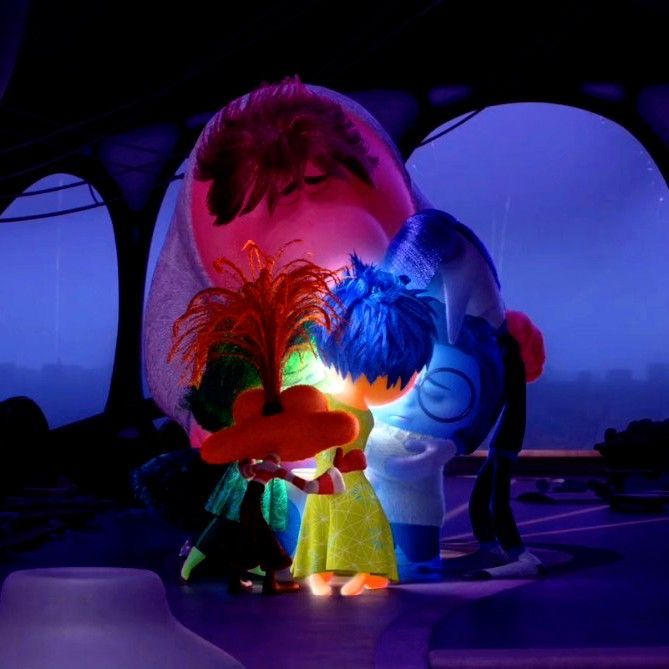
Few studios understand the human mind quite like Pixar. Whether it’s the Inside Out movies, or Finding Nemo, their stories dive deep into how we feel, think, and grow, all through animation that feels like real life.
I recently rewatched Inside Out in my IB Music class, and it brought back so much nostalgia. In the first movie, we meet Joy, Sadness, Anger, Fear, and Disgust, which are five emotions inside a young girl named Riley’s brain. What the movie captures beautifully is that every emotion has a purpose. Sadness creates connection because it’s how we show others we need support. Anger isn’t chaos, it’s protection and an important outlet. The film also shows how emotions shape our memories: Joy tries to keep them purely happy, while Sadness gives them depth, turning them into something more real and meaningful. We all experience the same core emotions, but we express and process them in completely different ways, which is something the film shows through Riley’s emotions compared to her parents’. I remember watching that movie when I was just a little 7-year-old in elementary school, and it all felt so relatable as I watched Riley learn to cope with her emotions as she grew up and dealt with new feelings and change. I especially related to Riley’s emotions as I moved from Massachusetts to Maryland, just as Riley moved from Minnesota to San Francisco (California), which was difficult to navigate at that age.
Then, when Inside Out 2 came out when I was 16 years old, it was like the movie grew up with me. The introduction of the new characters, Anxiety, Envy, and Embarrassment was so realistic. Navigating school, extracurriculars, friends, and so much more leads to so. much. anxiety. More than it should, probably. As a teenage girl, Envy is the epitome of comparing yourself to others and dealing with insecurities.
Pixar understood its audience, and adapting its storyline to fit this audience was the best move it could make, evoking so much emotion in almost every viewer, young or old. Because no matter how different we are, one thing remains consistent–the power of feeling. Inside Out and Inside Out 2 taught me something so important: no one emotion is the villain, not even Sadness or Anxiety. Instead, these movies have taught viewers the lesson of emotional balance and development, as each emotion must work together to be appropriately balanced and not suppressed.
Neuroscience supports this idea because emotions aren’t “good” or “bad,” they’re signals. The amygdala helps generate emotional responses, while the prefrontal cortex works to regulate them. Together, they guide how we react, connect, and make decisions. When we suppress certain emotions, we also silence part of ourselves.
What Pixar does best is remind us that emotions are also data, not distractions. They tell us what we need, what matters, and who we are. When we stop running from them, we begin to understand ourselves a little more deeply, not by controlling every feeling, but learning to listen to them. 🎬


Leave a Reply